


Contemporary Art Society Annual Conference: Care in Practice
Wednesday, 9 September 2026, 10:00 am - 4:30 pm
Jade de Montserrat
Griselda Pollock
Nataša Petrešin-Bachelez
Paul O’Neill
Venue: Assembly Room, Whitechapel Gallery, 77–82 Whitechapel High Street, London, E1 7QX
Travel bursaries are available to apply for here.
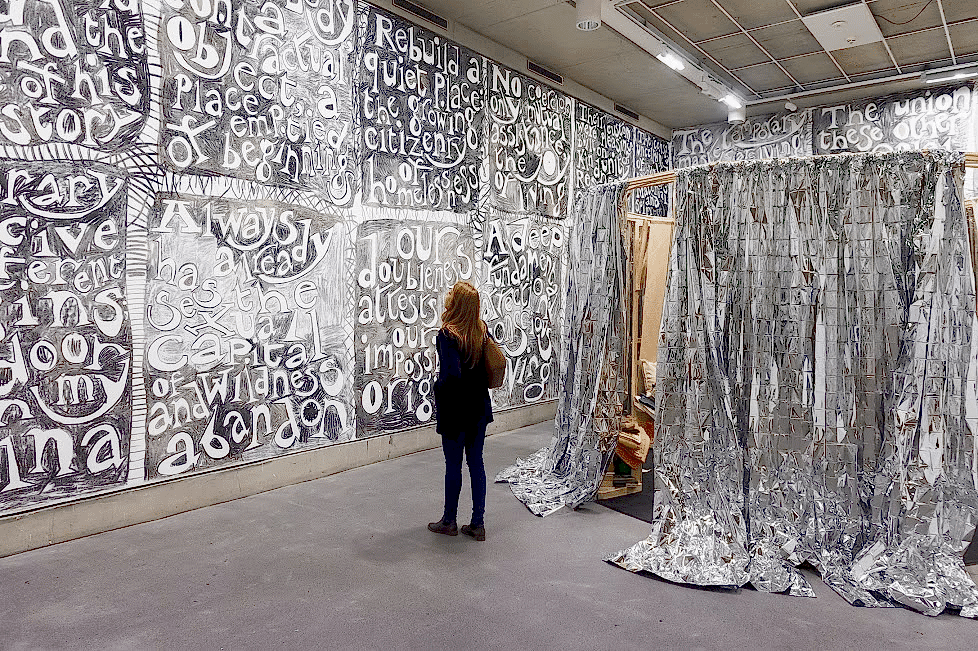
Jade de Montserrat: Instituting Care, Bluecoat, Liverpool, 2018. Photograph by Harry Meadley.
The 2026 Annual Conference of the Contemporary Art Society, Care in Practice, will explore how practices of care unfold within institutions and how they might support, foster and reshape today’s museums and art collections. The conference proposes to approach care as a critical curatorial methodology, one with the potential to repair, transform and protect how institutions relate to their collections, histories, and the people who give life to them (artists, communities, and curators alike).
More broadly, the programme will consider how care might challenge dominant institutional logics of accumulation, authority, and speed. It will ask whether care could support slower, relational, and ethically attentive approaches to cultural stewardship, foregrounding practices that acknowledge responsibility, reciprocity, and interdependence within cultural institutions. Structured around thematic sections and four speakers, the conference will bring together leading thinkers and practitioners whose work engages with care from curatorial, artistic, and theoretical perspectives.
Curator Nataša Petrešin-Bachelez will address care through her research on empathy, transnational feminism, slow institutions, degrowth, and interdependence. She frames care as a strategy for resisting competitive and extractive cultural systems, one that values reproductive and often invisible labour within cultural work. In her approach, care also becomes a way to recognise emotional and affective labour in art institutions and a means of addressing and repairing historical inequalities.
Artist Jade de Montserrat engages with care through durational, embodied, and socially engaged practices. Her work creates spaces that acknowledge grief, trauma, and collective memory, foregrounding processes of repair, restoration, and reparation. De Montserrat’s critique of how cultural production can inscribe itself on bodies and shape historical narratives offers a powerful entry point for thinking about care within contemporary art. Combining performance and discussion, de Montserrat's revival of "Shadowing Josephine" factors as the pont of departure for a consideration of care within and beyond the site of cultural production.
Reflecting on care through her longstanding research in psychoanalytic feminism and aesthetics, art historian Professor emerita Griselda Pollock will give a presentation introducing the Matrixial aesthetics of curating under the rubric of care as an ethics of cultural stewardship not only of art but also the experience of our encounter with and through art. She will explore artist-theorist Bracha Ettinger’s concept of Matrixial ethics, aesthetics and subjectivity as Ettinger proposes that subjectivity is also formed through shared vulnerability and compassion. This framework offers a theoretical lens through which care might be enacted as an ethical process within cultural institutions that is as much about the visitor or audience as it is about the artwork and the artist since respecting this matrixial dimension deflects the normalised phallic, and indeed feminicidal norms of curation and culture in general.
Author and curator Paul O’Neill will contribute a perspective informed by his recent book 'Beyond Caring: Para-Hosting as Curatorial Escape'. O’Neill questions institutional discourses of care and proposes moving ‘beyond caring’ toward structural transformations in curatorial and institutional practice. His concept of ‘para-hosting’, in which hosts and guests exchange roles, reimagines how institutions might redistribute authority and responsibility. This proposition offers a provocative starting point for reconsidering how museums and art organisations might rethink their modes of engagement and governance.
These perspectives will frame a wider conversation about how care might operate not only as a concept, proposal or ethic, but also as a practical tool and embodied methodology for curating, collecting, and sustaining life within contemporary art institutions.
Please feel free to get in touch with any questions: [email protected]

Nataša Petrešin-Bachelez. Portrait by Maurine Tric.
Nataša Petrešin-Bachelez is an interdependent curator, editor, writer, and cultural practitioner based between Abu Dhabi and Paris. Since 2026 she has worked as Head of Curatorial for the Public Art Abu Dhabi at the Department of Culture and Tourism in Abu Dhabi. Her work focuses on practices of care, transnational feminism, ecology, institutional responsibility, and socially engaged artistic practices. Between 2021 and 2026, she led the artistic and cultural programme at the Cité internationale des arts in Paris, and she is co-founder, with Elena Sorokina, of the Initiative for Practices and Visions of Radical Care. Her curatorial projects include 60 Years From Now; Relaying (curated with Ana Janevski, Cité internationale des arts, Paris, 2025), Contour Biennale 9: Coltan as Cotton (Mechelen, 2019), Defiant Muses: Delphine Seyrig and the Feminist Video Collectives in France (curated with Giovanna Zapperi, a.o. Museo Reina Sofia, Madrid, 2019-2020 and Kunsthalle Wien, Vienna, 2022), Let’s Talk about the Weather (curated with Nora Razian, Sursock Museum, Beirut, 2016), and Tales of Empathy (Jeu de Paume, Paris, 2014). She has also served as chief editor of Manifesta Journal and L’Internationale Online. Through her curating, writing, and teaching, Petrešin-Bachelez develops models for more situated and sustainable cultural institutions.

Jade de Montserrat. Portrait by Studio Damian Griffiths.
Dr Jade de Montserrat works through performance, drawing, painting, film, installation, sculpture, print and text. Concerned with challenging structures of care in institutions and with the intersection of gender, race, class, and colonialism, often in the context of life in rural communities, she makes artworks that explore the vulnerability of bodies, the importance of recording and preserving history, and the tactile and sensory qualities of language. de Montserrat has exhibited across the UK and internationally, and is represented by Bosse & Baum Gallery, London. de Montserrat is a Tutor at Ruskin School of Art, University of Oxford and Lecturer in Painting at Slade, University College London.
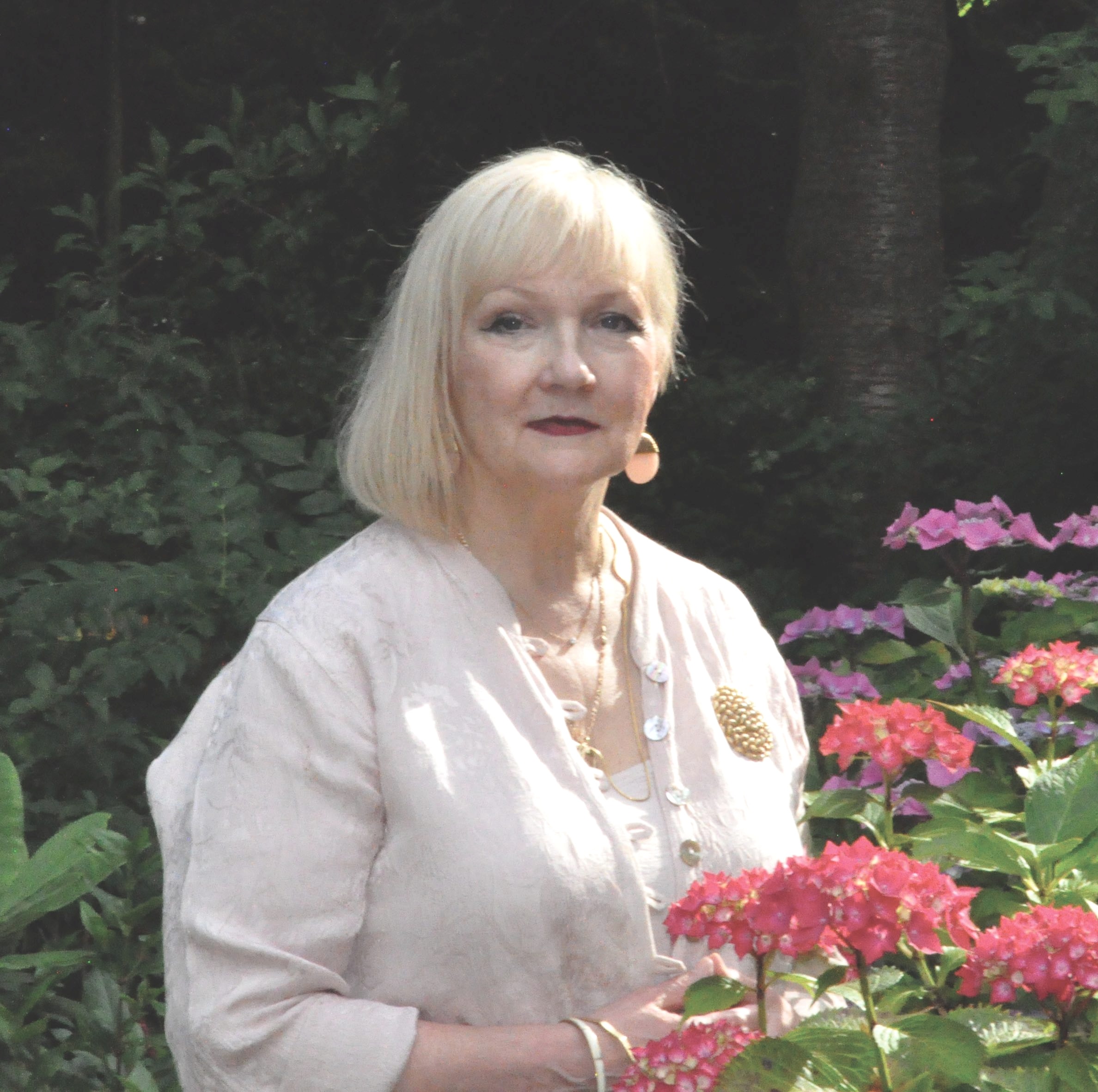
Griselda Pollock.
Professor Emerita of Social and Critical Histories of Art at the University of Leeds, Griselda Pollock is a social-feminist art historian, cultural theorist, curator and author. Her work has transformed the fields of art history, feminist visual studies, cultural analysis by challenging dominant narratives and foregrounding the complexities of gender, class, race, memory, trauma, and representation. Her publications include classics such as Old Mistresses: Women, Art and Ideology, co-authored with Rozsika Parker (latest edition Bloomsbury 2022) and Vision and Difference (1988) and more recently Charlotte Salomon in the Theatre of Memory (Yale University Press, 2018), Killing Men & Dying Women: Imagining Difference in 1950s New York Painting (Manchester University Press, 2022), WOMAN IN ART: Helen Rosenau’s ‘Little Book’ of 1944 edited and introduced by Griselda Pollock (2023); Feminism, Pedagogy and the Studio: Reflections Across Four Decades (Sternberg Press, 2024). She has curated many exhibitions including Resonance/Overlay/Interweave: Bracha L. Ettinger in Freudian Space, Freud Museum, London and the Academy of Fine Art, Helsinki 2009-10; with Sam Belinfante Lessons in the Studio/Studio in the Seminar: Seventy Years of Fine Art at Leeds, 2019/2020 at the University of Leeds) and Medium &Memory: Four Conversations, HackelBury Fine Art, London, 2023-24. Recipient of the Holberg Prize 2020 and the CAA Lifetime Achievement Award for Writing on Art, Pollock continues to shape critical conversations around art, care, justice, and cultural responsibility. Website: www.griseldapollock.art

Paul O'Neill. Portrait by Aman Askarizad.
Paul O’Neill is an Irish curator, artist, writer, educator, and leading scholar of curatorial practice, public art, and exhibition histories. He is Artistic Director of PUBLICS in Helsinki, a curatorial agency, commissioning platform, library, event space, and reading room dedicated to contemporary art, publicness, and critical social thinking. From 2013 to 2017, he directed the Graduate Program at the Center for Curatorial Studies, Bard College, New York. O’Neill has curated and co-curated over 80 exhibition projects internationally, and has taught widely across curatorial and visual arts programmes. His influential publications include 'The Culture of Curating and the Curating of Culture(s)' and several edited volumes on curating, education, collectivity, and public engagement. Most recently, he published 'Beyond Caring: Para-Hosting as Curatorial Escape'. Through his work, O’Neill explores how curatorial practice can create shared spaces for learning, dialogue, civic imagination, including cooperative exhibitions and institutional structures. The Paul O’Neill archives (1993-2023) are held at the collection of the Irish Museum of Modern Art. In 2027 Paul will curate the annual international contemporary art festival Survival Kit in Riga.
Schedule:
Introduction
10:00 – 10:30 am: Arrivals
10:30 – 10:35 am: Welcome by Caroline Douglas
10:35 – 10:45 am: Introduction by Dr Paula Zambrano
Morning Sessions
10:45 – 11:35 am: Paul O’ Neill
11:35-11:45 am: 10-min break
11:45 am – 12:35 pm: Nataša Petrešin-Bachelez
12:35 pm – 14:00 pm: Lunch Break
Afternoon Sessions
14:00 – 14:50 pm: Jade Montserrat
14:50 – 15:00 am: 10-min break
15:00 – 15:50 pm: Griselda Pollock
15:50 – 16:00 pm: 10 min break
Closing Segment
16:00 – 16:30 pm: Panel Discussion & Q&A