


Reflections on the Royal Academy's Summer Exhibition 2026
- Posted:
- Friday dispatch
- Type:
- Read Time: 6 minutes

Summer Exhibition 2026, Royal Academy of Arts, London, 16 June - 23 August 2026, showing 'The Song is You' by Ugo Rondinone. Photo: © Royal Academy of Arts, London / David Parry
Walking into the hallowed rooms of the Royal Academy, you’re immediately struck by the weight of its history. Though in reality, there is nothing more ‘contemporary’ than the RA’s annual Summer Exhibition. Beginning in 1769, a year after the Royal Academy was founded, the group show is defined by its enduring commitment to showcasing work by contemporary artists. A commercial exhibition with an open submission policy, it has consistently raised money for incoming students at the RA Schools – one of the most prestigious and only free art institutions in the country.

Gallery view of the Summer Exhibition 2026, at the Royal Academy of Arts, London, 16 June - 23 August 2026. Photo: © Royal Academy of Arts, London / David Parry
Seldom without visual chaos, the traditional ‘salon hang’ of the Summer Exhibition displays works from floor to ceiling. Lining the walls are prints and paintings of varying sizes, while three-dimensional mediums – sculpture, ceramics and installation – punctuate the space: installed at the centre of the galleries, or resting delicately on shelves and plinths. This year, Ryan Gander RA OBE was invited to co-ordinate the Summer Exhibition, an honorary role that is awarded to a different Royal Academician each year. When I spoke with him, Gander reflected on this career milestone as well as how far he has come since first visiting the Summer Exhibition as a teenager. “I remember going to the Summer Exhibition with one of my art teachers when I was 15” he reminisces. Impressed by the sheer volume of work and artistic flair from across the nation, he made a pledge to himself. “I remember very naively and hopefully thinking, ‘One day I’m going to apply to be in it.’”

Gallery view of the Summer Exhibition 2026, at the Royal Academy of Arts, London, 16 June - 23 August 2026. Photo: © Royal Academy of Arts, London / David Parry
Born and raised in Chester, Gander went on to study at the Manchester Metropolitan University, graduating in 1999, before undertaking postgraduate studies in the Netherlands. By the mid-2000s, he had established himself as a rising artist, winning the Baloise Art Prize at Art Basel for the video work Is This Guilt in You Too (The Study of a Car in a Field) (2005). In 2022, he was appointed a Royal Academician, requiring him to submit work to the Summer Show every year and participate in its Council. As a former RA professor, he is deeply committed to the prosperity of the RA Schools. He worked tirelessly to encourage as many RAs and notable artists based in the UK to exhibit work. “I called as many artists as possible and told them they had to give work” he states in a soft north western lilt. He rounded up an illustrious roster: Thomas J. Price, Antony Gormley, Tracey Emin, Alvaro Barrington, Helen Marten, Ugo Rondinone, Frank Bowling and many others.

Gallery view of the Summer Exhibition 2026, at the Royal Academy of Arts, London, 16 June - 23 August 2026. Photo: © Royal Academy of Arts, London / David Parry
The artist understood that the curatorial brief would be different here than in other quarters. “The Summer Show is its own kind of special monster,” he tells me. “But I’ve never tried to critique it, it’s its own thing.” Despite curating the first few galleries to resemble an institutional show – for example, the octagonal central hall is more sparsely hung – the rest of the show is delightfully eclectic and, at times, overwhelmingly crammed. But that’s part of the tradition. It’s a goliath group show that takes no prisoners. This year, a record number of artworks were submitted, some 18,000 works in total. Gander, alongside RA Council members such as Eileen Cooper, Michael Craig-Martin and Goshka Macuga, whittled the list down to 1,800 – an impressive culling that would leave anyone reeling.
‘Interconnectedness’ is this year’s theme, a suitably expansive and fittingly vague curatorial lens for the world’s biggest group exhibition. “It’s about the beauty in the way things collide and accidentally associate,” Gander asserts. But this principle extends further, to a more human and conscientious way of looking at the world. He insists that the point was to include as much work as possible, but also to celebrate the subtle connections between disparate pieces, inviting the viewer to use a discerning eye, and find the connective elements that can be drawn together. “We have more things in common than differences,” Gander adds. “And I think that’s something to be celebrated – or at least, understood.”

Gallery view of the Summer Exhibition 2026, at the Royal Academy of Arts, London, 16 June - 23 August 2026. Photo: © Royal Academy of Arts, London / David Parry
Gander explains that they used subtle curatorial devices to unify the rooms. “I didn’t want it to feel like an exhibition of disparate parts – and the way it's curated reflects this. For example having the pale stripe painted across every room. If you look more closely, all the shelves and plinths are the same design and painted the same two colours.” The stripe he refers to, runs throughout all the rooms at the two-meter mark (apparently the rough height which gentleman’s top hats would have once reached).

Gallery view of the Summer Exhibition 2026, at the Royal Academy of Arts, London, 16 June - 23 August 2026. Photo: © Royal Academy of Arts, London / David Parry
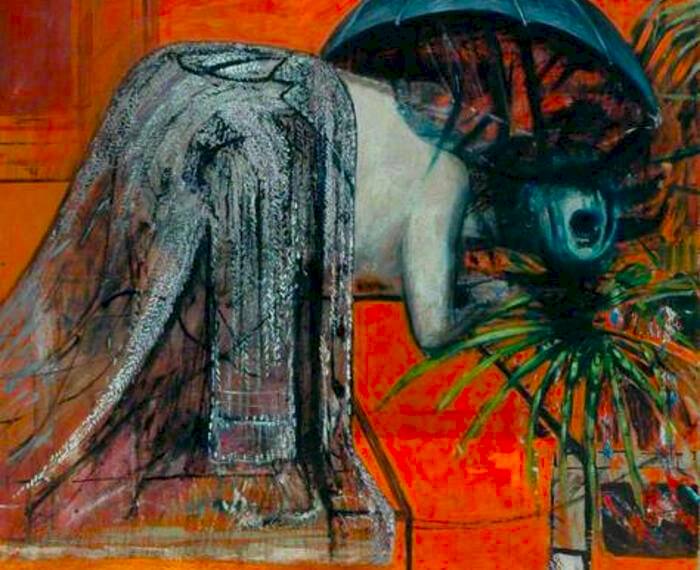
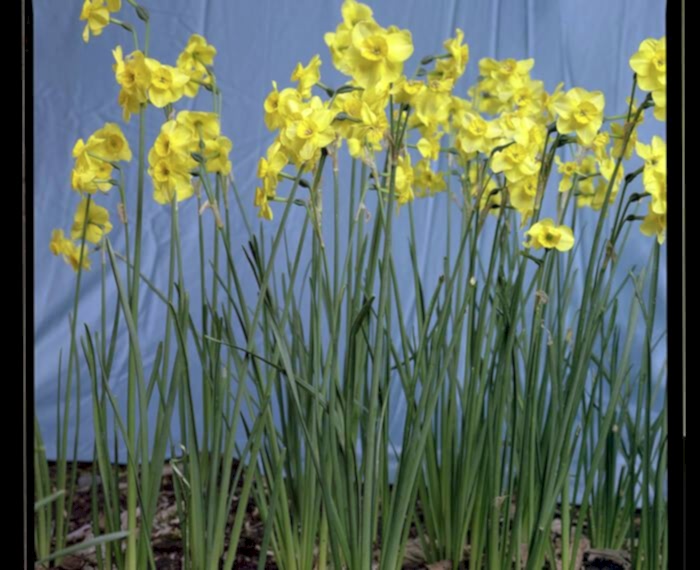
Gander acted as Chair of the Hanging Committee, but the co-ordination of the Summer Exhibition is a collaborative affair, split across the RA Committee. Katherine Jones’s section is filled with paintings and prints with a verdant theme: gardens, flowers and nature. Eileen Cooper’s area is characterised by small-scale, psychological portraits – echoing the artist’s own preferred subject matter. One of the most memorable pieces in the show, however – selected by Gander – is Pin It On Them (2026) by the Belfast-born sculptor Tim Shaw. His soft sculpture reveals two world leaders – Donald Trump and Benjamin Netanyahu – gazing into each other’s eyes, Netanyahu placing his hands over Trump’s in a circle of barbed wire. Beneath them, a puddle of discarded, burnt clothing and a roulette wheel acts as their plinth. It aptly fits Gander's preference for works that speak to the politics of today “without being didactic.”

Gallery view of the Summer Exhibition 2026, at the Royal Academy of Arts, London, 16 June - 23 August 2026. Photo: © Royal Academy of Arts, London / David Parry
Beyond assessing dizzying swathes of art – all of varying quality – one of the most enjoyable aspects of curating the Summer Show is participating in the RA’s historic rituals. On Varnishing Day all of the exhibiting artists meet in the galleries, to become acquainted with each other, discuss, and peruse each other’s works – it’s a wonderful opportunity for artists to meet their heroes (or be humbled by those following in their footsteps). On that day, Gander met the artist Astrid Chesney, whom he was pleased to inform that he’d already decided to purchase her work, Always Watching. “We began chatting and at one point I told her about the work I had bought – it turned out to be hers. She was so surprised. I don’t usually buy art but I really liked her work – it reminded me of one of those Venetian masked figures.”

Gallery view of the Summer Exhibition 2026, at the Royal Academy of Arts, London, 16 June - 23 August 2026. Photo: © Royal Academy of Arts, London / David Parry
Another curious ritual attached to the curating of the Summer Exhibition is the daily serving of “beef tea”, a mix of bovril and sherry – a tradition that the institution insists on maintaining, doling the concoction out of a massive antique jug. It’s served by the Red Collars, the tailcoated doormen who work at the Royal Academy and Buckingham Palace. “We’d all drink bovril and sherry and have Jacob’s crackers with cheddar cheese,” Gander explains. I asked him if he liked it. “Well nobody really wants to drink sherry at 10 in the morning.”

Gallery view of the Summer Exhibition 2026, at the Royal Academy of Arts, London, 16 June - 23 August 2026. Photo: © Royal Academy of Arts, London / David Parry
Gander is pleased he took on the immense challenge of curating the Summer Show in his stride (bovril and all). And fortunately, thanks to his efforts, a record number of works were sold this year. “At the end of the day, the Summer exhibition isn’t about me as an artist, it’s about the Summer Exhibition, all of the entries and the School” he adds, before quipping: “But I’m also terrible at saying ‘no’ to things.”
Having carried the Summer Exhibition through another year, Gander is content to leave the chaos behind and return to the relative refuge of his Suffolk studio.
Lydia Figes, CAS Curator of Digital (currently on maternity leave)
Summer Exhibition 2026
Royal Academy of Arts
16 Jun – 23 Aug 2026


