

CPD Resources

© Boyce, Sonia Dawn (1962): © Sonia Boyce. All Rights Reserved, DACS 2023.
Publications, Conferences, and Study Day Reports
Our Continuous Professional Development (CPD) Programme provides arts professionals with a national and international perspective on public collection development that will support their working lives. It is the only UK wide programme that generates new ideas and shares existing knowledge relating to the institution of the museum and the development of public collections of contemporary art.
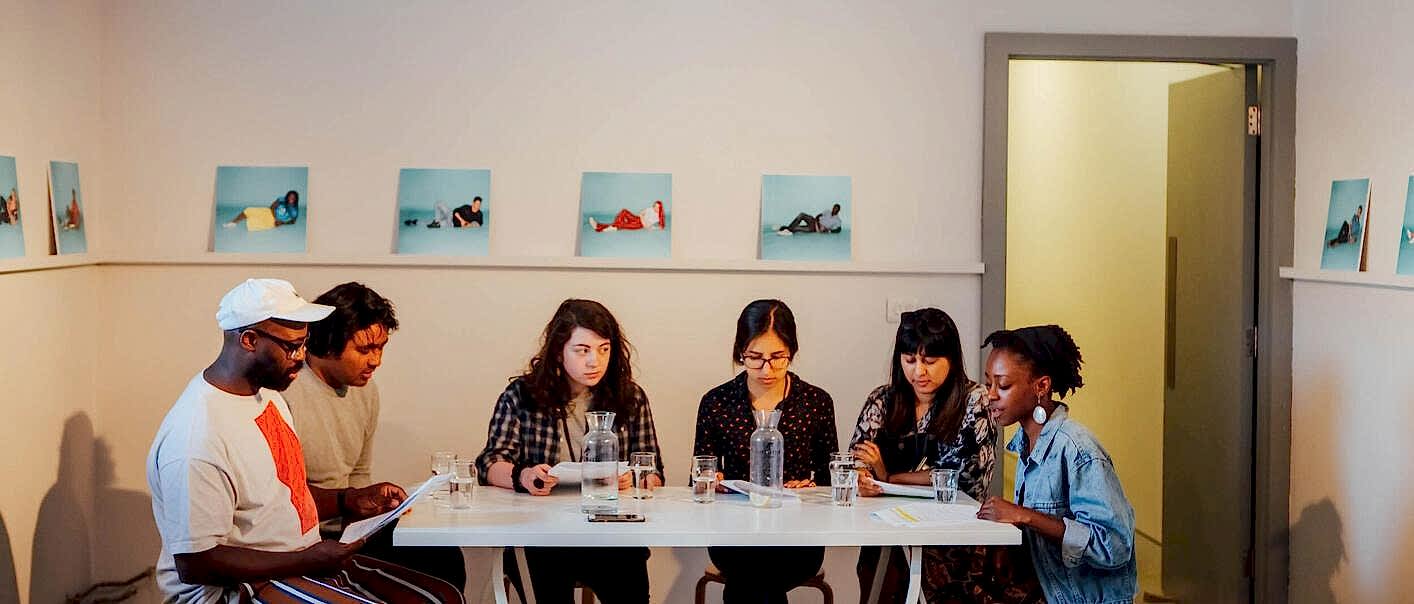
‘Doing the Work: Embedding Anti-Racism and Decolonisation in Museum Practice’ was a series of seven closed, online workshops for museum professionals that took place in 2021. It was co-produced by Anjalie Dalal-Clayton at the Decolonising Arts Institute (University of the Arts London) and Ilaria Puri Purini at the Contemporary Art Society.
They developed their idea for the series in 2018, recognising: a failure within the museum and gallery sector to dismantle its entrenched racist, imperial structures and practices; a nervousness or reticence by museum workers to ‘talk specifics’, especially in exposing, open forums; and a dire need to begin ‘doing the work’.1 Bearing in mind certain contexts of opposition and resistance that many museum staff find themselves working in, and their need to also consider institutional idiosyncrasies, each workshop was necessarily small, providing participants with an intimate, safe space for focussed conversation where Chatham House Rule applied.
The series was premised on the understanding that it is not possible to produce a one-size-fits-all set of strategies or ‘toolkit’ for embedding anti-racism and decolonisation in museum practice. The onus to develop feasible approaches for doing this work must be on white professionals in the sector. Participants, drawn primarily from the Contemporary Art Society’s museum members, were therefore asked to come prepared to speak generously and candidly about their concerns and experiences, to discuss specific strategies they had trialled where possible, and to offer each other peer support through sharing ideas and offering feedback.
Each workshop focussed on a specific area of museum practice (curating, interventionist strategies, documentation, interpretation, collecting and engagement) and was framed by two presentations given by individuals who have an exemplary track record of implementing anti-racist and/or decolonial practice relevant to the focus of the session. Each workshop was also attended by an early career museum professional who was commissioned to write a discursive account that synthesised and critically reflected on the key areas of discussion, whilst offering anonymity to the participants and institutions involved. Recordings of the framing presentations are available to view on the Contemporary Art
Society and Decolonising Arts Institute webpages, and this publication presents the accounts from the ‘Doing the Work’ series offer a unique insight into the specific concerns and experiences of the museum and gallery sector’s ‘frontline’ workers, surface key commonalities across diverse and wide-ranging institutions, and highlight the urgent tasks facing the sector’s leaders. It is hoped that staff working across all areas and levels within museums can use these reports to inform meaningful, embedded and sustainable changes that will, in turn, begin to dismantle the racist and imperial modes of thinking and doing that underpin most museum practices.
Conferences and Study Day Reports
Our CPD Programme is now publishing written reports from Contemporary Art Society Study Days and Conferences. Summarising the most salient issues of the day, this material is hopefully a useful research tool for the participants as well as others who could attend the event.
CAS Conference: On Radicalism (1 May 2025) Swedenborg House, report by Jelena Sofronijevic
Jelena Sofronijevic’s report on the CAS conference On Radicalism explores how museums and galleries can pursue profound social and institutional change by questioning their foundational structures and acknowledging their complicity in historic and ongoing injustices. The conference featured a range of speakers addressing the tension between radical activism and traditional institutional practices — from Sharon Heal’s reflections on heritage and funding amid political and economic crisis, to Helen Legg’s exploration of custodianship versus acquisition, and Katya García‑Antón’s calls for collaborative, indigenous‑led approaches that respect living knowledge and shared heritage. Other contributions, such as Clare Carolin’s decolonial provocations and Sepake Angiama’s exercises in unlearning, emphasised embodied knowledge and communal learning as vital to any genuinely radical practice. Together, the speakers argued that radicalism in the cultural sector is not a new endeavour but an ongoing, collective effort to rethink who museums and galleries serve, challenging institutions to evolve with integrity, equity, and care.
CAS Conference: Portals, Art and Spirituality (9 May 2024) Swedenborg House, report by Henry Palmer
For their second in-person study day since before the pandemic, the focus on the connection between the material and the spiritual was at the heart of the Contemporary Art Society’s Portals, Art and Spirituality. This was a day for people to acknowledge the importance of being present. And, fittingly, the day's subject reflected the growing interest, that artists and art institutions have, in the inseparable connection between art and spirituality and in the spiritual condition of human beings. Throughout the day, these ideas were explored to scrutinise what has often seemed to be lacking in atheistic societies. The aim was to present a variety of approaches to spiritual practices and spiritual beliefs within contemporary art and culture that may encourage and produce changes in consciousness that in turn can create an opportunity to change society.
Download CPD Symposium Report.pdf
On Making the Impossible Possible: Artwork presented to CAS Museums through Valeria Napoleone XX Contemporary Art Society, 2016-2024 by Helena Reckitt
To coincide with the Valeria Napoleone XX Contemporary Art Society Scheme's eighth year, Professor Helena Reckitt wrote a report about gender disparity in museum collections, considering how the VN XX CAS scheme has consistently championed the representation of women artists in UK museums. Helena Reckitt has pursued her interest in the work of feminist and queer artists and thinkers across teaching, curating, editing, and writing roles in non-profit art organisations and universities in the UK, Canada, and the US. She is Reader in Curating in the Art Department at Goldsmiths, University of London, and founder of the Feminist Duration Reading Group www.feministduration.com, currently in residence at Goldsmiths CCA.
CPD Symposium: Herbert Art Gallery & Museum, Coventry 12 September 2023
The objective of the Contemporary Art Society Curators’ Study Day at the Herbert Art Gallery and Museum in Coventry was to explore the concept of a nation and address how this notion informs, shapes, and affects collections of contemporary art. The event included a variety of activities that, through different entry points, offered diverse perspectives on how the concept of a nation is conceived but also lived, experienced, and embodied. Taking place in various rooms across the Herbert, activities included a panel discussion, a performance, a lecture, a guided tour, as well as informal conversations during lunch.
Download CPD Symposium Report.pdf
CPD Symposium: New Genealogies of Art History/New Systems of Thinking on 28 April 2023
As museums and galleries continue to recover from the effects of the global pandemic, the need to rethink current working practices is felt urgently across the cultural sector. From funding cuts and widespread redundancies to the ongoing fight for decolonisation and social inclusion, cultural institutions face deep-rooted, interconnected, and systemic challenges.
Download CPD Symposium Report.pdf
Hosting Artists Museums Residencies on 26 May 2022
Held in the project space of Delfina Foundation on 26 May 2022, the CPD Hosting Artists 2: Radical Residencies seminar convened art professionals from major museums across the UK to discuss the different ways institutions and artists interact through residencies.
Download Hosting Artists Museums Residencies Report.pdf
Study Day: Curating and Installing Digital Art Held at The Cello Factory on 1 November 2019
This study day explored how institutions can adapt to the challenges of curating and installing art created with the latest technology, including Augmented Reality & Virtual Reality, AI & Generative Art, as well as 3D Sculptural & Interactive Art. Held in collaboration with Lumen Art Projects.
Download Study Day: Curating and Installing Digital Art Report.pdf
Frieze Curatorial Summit 3 October 2019
This year’s CAS/Frieze Curatorial Summit looked at the resurgence of populism and the far-right, which echoes the days when the School of Bauhaus closed due to mounting pressure from the Nazi regime. Moderated by artist Liam Gillick, a group of international speakers discussed the situation in countries including Brazil, Turkey and Germany and how institutions can respond to the current climate. An audio recording of the talk can be found here.
Download Frieze Curatorial Summit Report.pdf
CAS Annual Conference 2019: Re‐Writing the Canon? Held at The Courtauld Institute of Art on 14 May 2019
n recent decades, notions of a fixed “canon”, or a single narrative in modern and contemporary art has come under question from all sides. How can museums keep pace and respond to these new imperatives? What happens when ‘the grand narratives’ are no longer considered fit for purpose? How are collections, exhibitions and displays to be rethought – according to what criteria, and for whom? Films of the day can be found here.
Download CAS Annual Conference 2019 Report.pdf
Study Day: Strategies of Digital Curating Held at the Science Museum, London on 8 March 2019
Held in collaboration with Serpentine Galleries, this seminar explored the different roles that the ‘digital’ holds within institutions and the new sets of skills required by curators beyond technical expertise and curatorial knowledge.
Download Study Day: Strategies of Digital Curating Report.pdf
CPD Study Day: Curating Feminist Technologies Held at the De La Warr Pavilion, Bexhill-on-Sea on 20 March 2019
This study day discussed feminism, female art practise and gender throughout collections, displays and exhibitions.
Download CPD Study Day: Curating Feminist Technologies Report.pdf
Seminar: Collecting Performance Held at De Montfort University, Leicester on 30 January 2019
This seminar, held in partnership with the Art Fund at De Montfort University in Leicester, reassessed the status of collecting performance in museums today; examined a range of case studies and shared models of best practice; brought together curators working in public collections to better understand the appetite for collecting performance across the UK; as well as the challenges in collecting ephemeral practice.
Download Seminar: Collecting Performance Report.pdf
Seminar: Collecting Performance Held at De Montfort University, Leicester on 30 January 2019
This seminar, held in partnership with the Art Fund at De Montfort University in Leicester, reassessed the status of collecting performance in museums today; examined a range of case studies and shared models of best practice; brought together curators working in public collections to better understand the appetite for collecting performance across the UK; as well as the challenges in collecting ephemeral practice.
Imperfect Pasts | Contested Futures: Working with public collections in the 21st Century Held at Manchester Art Gallery on 21 November 2018
This study day explored the question of decolonisation in relation to art collections and museums, taking into account notions of history, colonialism, identity and community. It also investigated the role played by museums – through their acquisitions, exhibitions, partnerships and alliances – in grappling with this increasingly urgent task.
CPD Programme Study Day: The Art of Clay Held at the Yorkshire Museum on 12 September 2018
Following the launch of the Jackson Tang Ceramics Award, this study day explored the art of clay as a hybrid, collaborative and interdisciplinary practice.
Download CPD Programme Study Day: The Art of Clay Report.pdf
Annual Conference – The Virtual in Museums: Hot Medium? Held at the National Gallery on 10 May 2018
The Contemporary Art Society’s 2018 Annual Conference explored the rapid development of digital imagery in the artistic realm and its representation in museums. Films of the day can be found here.
Download Annual Conference - The Virtual in Museums: Hot Medium? Report.pdf
Annual Conference – The Museum as Battlefield: Alternative Models of Museum Practice. Held at the British Museum on 2 May 2017
The 2017 Contemporary Art Society Annual Conference examined radical strategies that museums around the world are deploying to rethink the way they display and conceive of their collections, and in how they operate within their communities. Films of the day can be found here.
Annual Conference: Reactivate the Collection. Held at the Weston Theatre at the Museum of London on 13 May 2016
The 2016 Annual Conference looked at strategies including inviting artists to curate collections and innovative partnerships to open collections to new audiences through digital technologies. Films of the day can be found here.
CPD Programme